What's in a Name? The Codex Paradox
18 September 2026
What’s in a name?
Apparently, a lot when it comes to AI products.
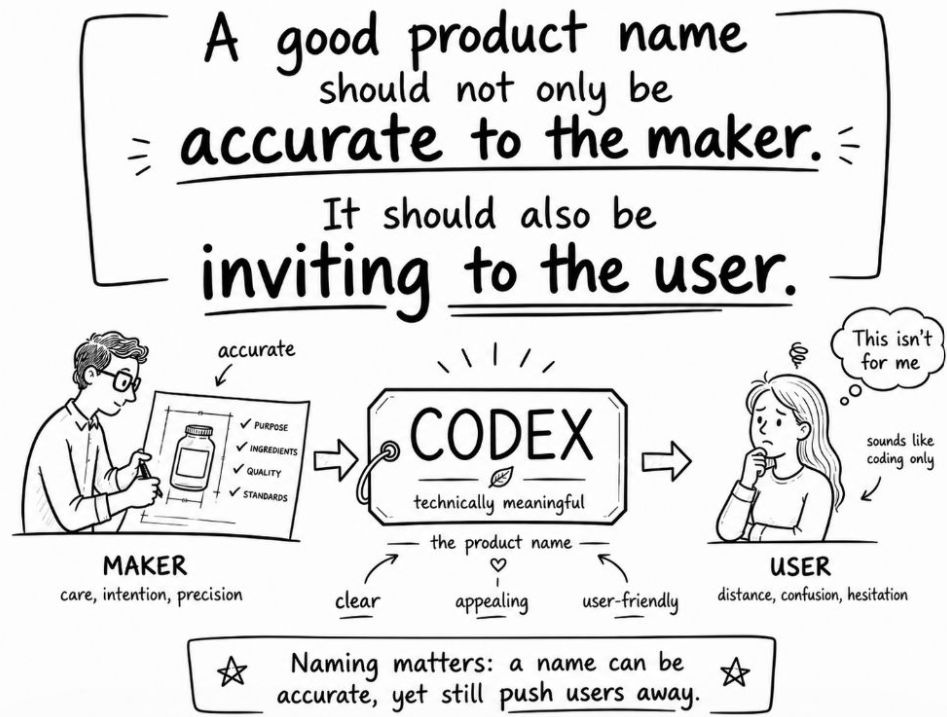
OpenAI named one of its most powerful agents Codex. The only problem is that most people hear Codex and immediately think code. That perception can unintentionally push non-coders away from a tool that is useful far beyond software engineering.
Over the last couple of weeks, we tried several of our internal AI&Beyond workflows, originally designed for Claude Code / Cowork, on Codex.
Most of these were not coding workflows. They included organising research inputs, working across files and folders, creating structured drafts, converting messy information into usable outputs, preparing repeatable workflow assets, and building lightweight internal tools.
And Codex handled them really well.
So why the name Codex?
The dictionary meaning of codex is a book, manuscript or ancient volume, especially one made of bound pages rather than a scroll.
That makes the name much more interesting. Codex is not just about code. It is closer to a working book of your knowledge, files, workflows and actions.
Of course, AI companies being AI companies, they managed to pick a name that is technically brilliant, historically meaningful, and almost guaranteed to make half the non-technical audience think:
“This is not for me.”
That is why product naming matters.
A good name should not only be accurate to the maker. It should also be inviting to the user.