What If WhatsApp Had a Work Mode?
12 July 2026
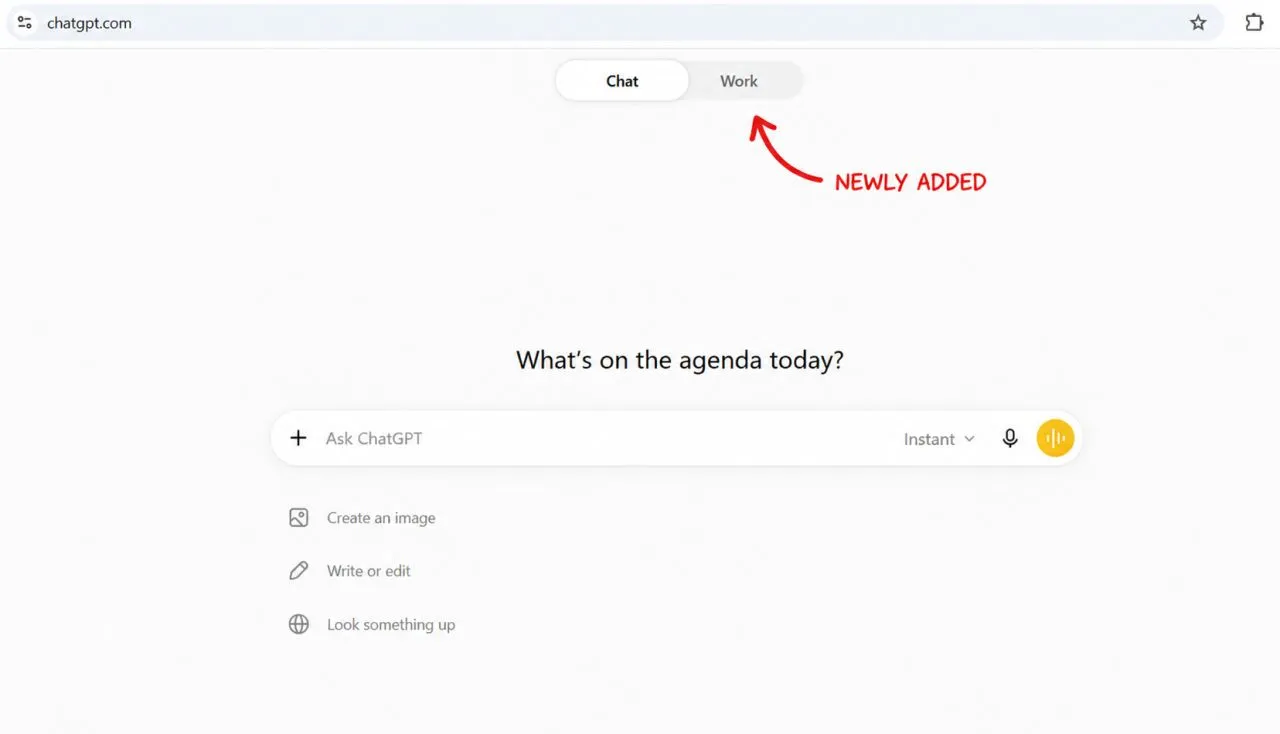
This is how the new ChatGPT interface looks after the introduction of Work mode.
Work mode is essentially a dedicated space inside ChatGPT for work tasks, connecting to tools and working with files, while Chat continues to remain the place for everything else. It is a simple interface change, but one that acknowledges that people increasingly use the same product for very different contexts.
But this post isn’t really about ChatGPT.
Over the past year, as we have worked with enterprises on AI adoption, one issue has come up repeatedly in conversations across industries: data fragmentation. Teams struggle because information is scattered across emails, CRMs, document repositories, project management tools, and countless other systems, making it difficult for both people and AI to access the complete context of work.
Interestingly, one of the biggest contributors to this fragmentation is rarely discussed.
WhatsApp.
Over the years, WhatsApp has quietly evolved into one of the most widely used work applications in enterprises, despite never really being designed as one. Customer discussions, vendor coordination, project updates, site photographs, voice notes, approvals, escalation messages, and quick decisions increasingly happen on WhatsApp because it is simply the fastest way to get work done.
The consequence is that a significant part of an organisation’s operational knowledge now lives outside its official systems. Important decisions become buried in chat histories, valuable context remains inaccessible to enterprise workflows, and AI systems have no structured way to participate in or learn from these interactions.
Seeing ChatGPT explicitly separate Chat and Work made me wonder whether a similar product decision could make sense for WhatsApp.
Imagine if WhatsApp had two clearly defined spaces: Personal and Work.
The value would not just be reducing notification overload. It would be creating a foundation for enterprises to integrate conversations into business workflows, connect them with internal systems where appropriate, preserve organisational knowledge, and enable AI agents to participate in work with the necessary governance and permissions.
I am sure this will be useful, but…
Will Meta build it? Kunal Shah