When Enterprise Software Interfaces Become Invisible
1 November 2026
An announcement from Oracle and OpenAI on October 27 offers a glimpse into how enterprise software interfaces may evolve.
The two companies announced an expanded partnership, including a new offering called Oracle AI Workspace (apparently still in development).
The idea seems to be to bring Oracle’s enterprise applications, data and business processes into ChatGPT, allowing employees to work across systems through a single AI-powered interface.
Consider a finance employee trying to understand an unexpected increase in costs. Today, that might involve navigating several applications, pulling reports, comparing data and checking approvals. With the proposed AI Workspace, the employee could simply describe what they want to investigate. AI would help bring together the relevant information and coordinate actions across connected applications, subject to the organization’s existing permissions and approvals.
But I find the larger implication interesting.
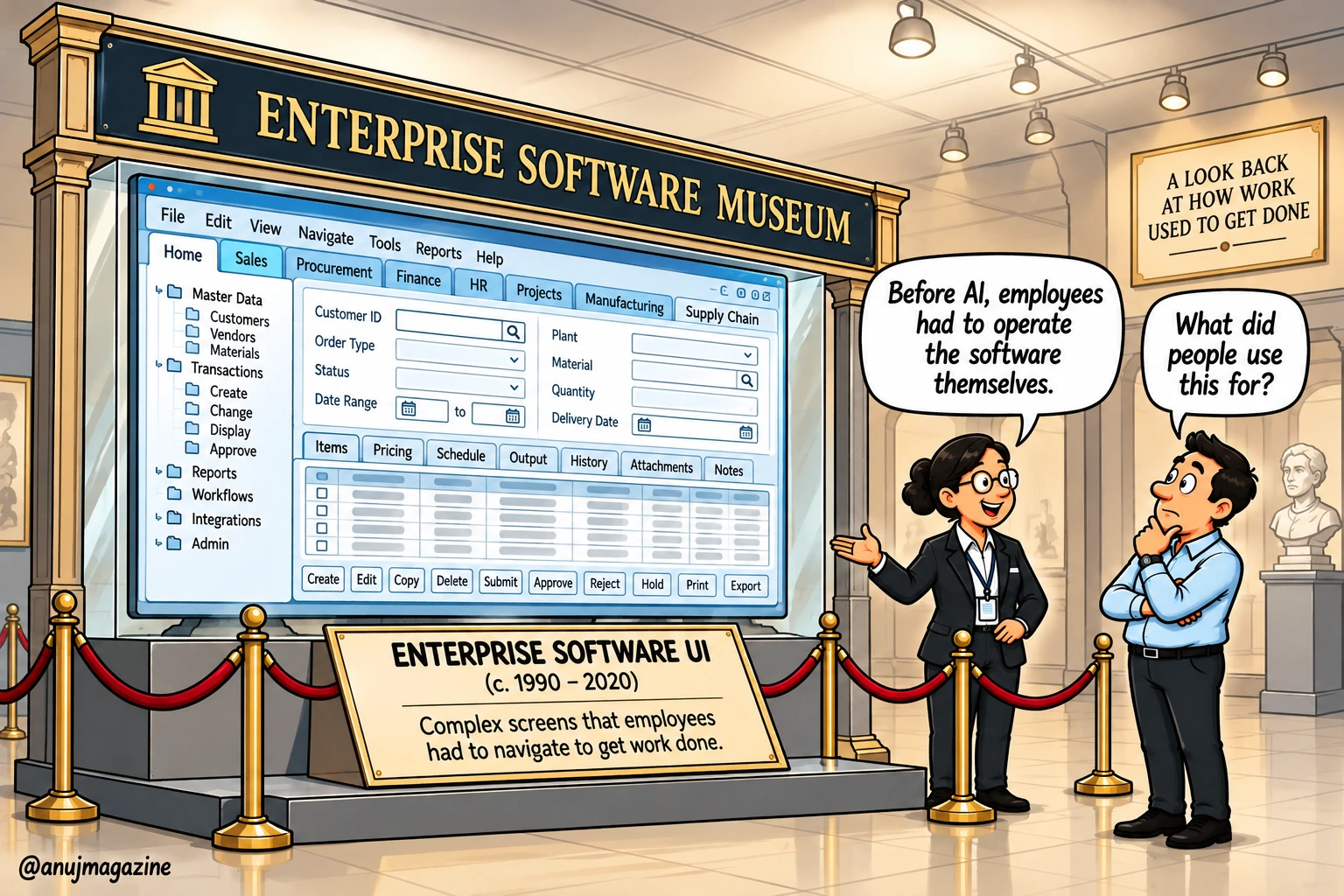
For decades, enterprise software has been built around screens, menus, forms, dashboards and workflows that employees had to learn to navigate. We have spent enormous effort training people to use software. We have now approached a point where software increasingly learns to work with how people naturally express what they want to accomplish.
The enterprise applications themselves aren’t disappearing. Their data, business rules and controls will remain important.
What is gradually becoming invisible is the traditional user interface sitting between the employee and the work.
References: